The Rise of Modular Website Design: Transforming Business Operations
So, you've probably heard the buzzwords: modular website design, composable architecture, headless this, microservices that. It sounds complicated, right? Well, it doesn't have to be. Basically, businesses are ditching those old, clunky website systems for something way more flexible. Think of it like upgrading from a giant, all-in-one stereo system to a bunch of smaller, specialized gadgets that all work together. This whole shift, often called 'The Rise of Modular Website Design,' is changing how companies operate online, making things faster, smoother, and way easier to update. It means businesses can actually keep up with what customers want without a total headache.
Key Takeaways
- Modular website design breaks down big systems into smaller, independent parts that work together using APIs. This makes websites much easier to update and manage compared to old, all-in-one systems.
- Businesses are moving to modular design because it offers more flexibility, lets them add new features faster, and makes it simpler to connect with other business tools.
- This new way of building websites helps companies give customers a more consistent experience across different devices, like phones, tablets, and computers.
- Modular systems speed up how quickly new features or entire websites can be built and launched, which is a big deal in today's fast-paced market.
- While moving to modular design has some challenges, like getting teams used to new ways of working, the benefits like better performance and easier updates make it a smart move for the future.
Understanding The Rise of Modular Website Design
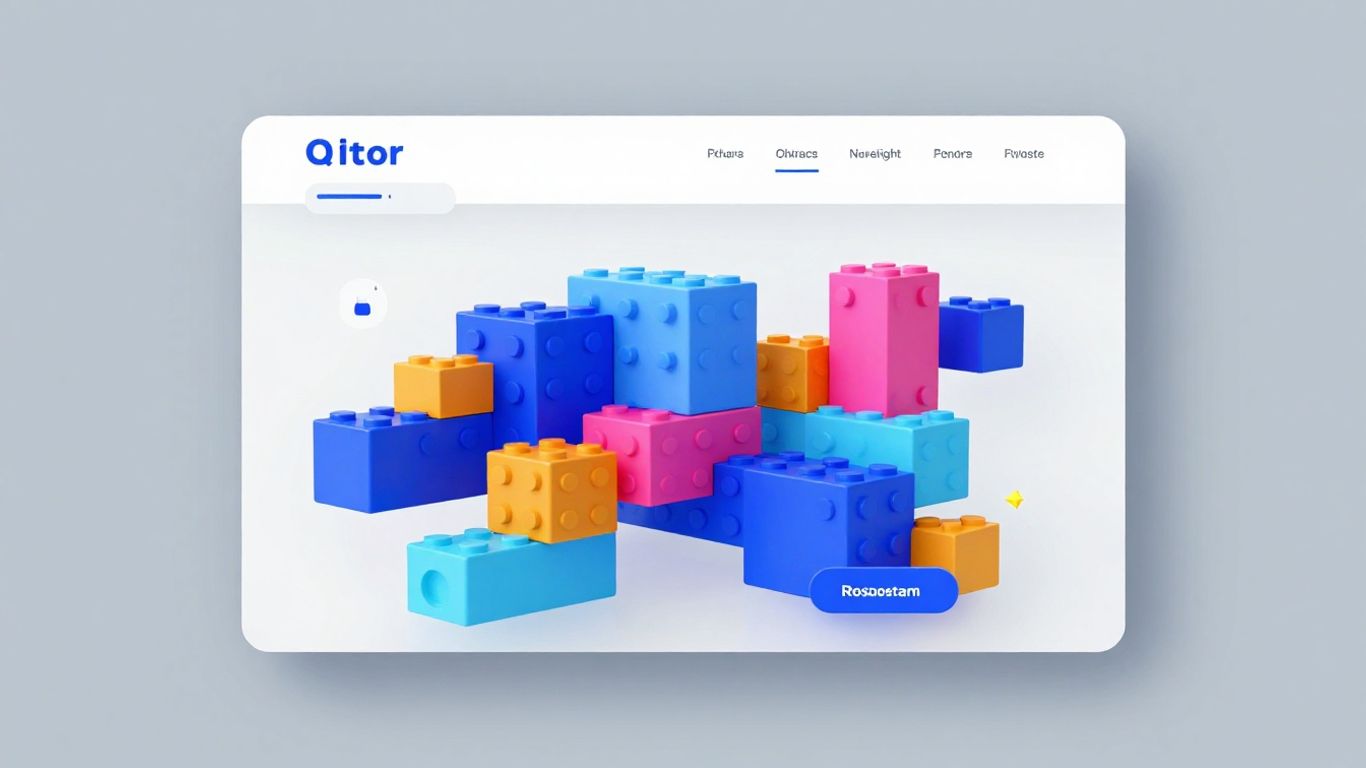
So, what's this whole modular website design thing everyone's talking about? Think of it like building with LEGOs instead of trying to sculpt something out of a single block of clay. Traditionally, websites were built as one big, interconnected piece. If you wanted to change one small thing, like update the payment system, you might have to touch a lot of other parts, which is a real headache. This is what we call a monolithic structure.
Modular Architecture Versus Traditional Systems
Monolithic systems are like a big, old house where all the rooms are connected by a single hallway. Everything is tied together. Need to renovate the kitchen? You might have to disrupt the living room and bedrooms too. It works, but it's not very flexible. Modular architecture, on the other hand, is more like a modern apartment complex. Each apartment is its own unit, with its own plumbing and electricity, but they all connect to the main building's services through specific points. You can renovate one apartment without bothering the neighbors. This separation makes things much easier to manage and update.
Here's a quick look at how they stack up:
| Capability | Modular Architecture | Traditional Systems |
|---|---|---|
| Scalability | Scales by module | Scales entire system |
| Flexibility | High | Low |
| Developer Productivity | High | Moderate to low |
| Innovation Speed | Rapid | Slow |
| Integration Support | Strong API-first | Limited |
| Maintenance Cost | Low long-term | High long-term |
| Modernization | Incremental | Full rebuild |
| Stability | High due to isolation | Lower due to coupling |
Why Businesses Are Shifting From Monolithic Structures
Businesses are moving away from those old monolithic setups because, frankly, they're becoming a drag. Trying to update or add new features to a monolithic website is slow and risky. It's like trying to upgrade the engine of a car while it's still driving down the highway. You risk breaking something important. Plus, with technology changing so fast, monolithic sites quickly become outdated, requiring massive overhauls that cost a fortune and take ages. The need for speed and adaptability in today's digital world is pushing companies towards more flexible solutions. The ability to quickly adapt to market changes and customer demands is no longer a nice-to-have; it's a necessity for survival. This is where modular design really shines, allowing for quicker updates and better website performance.
The Strategic Advantages of Modular Design
So, why is modular design becoming the go-to? For starters, it's all about flexibility. You can swap out components, like a different analytics tool or a new customer service chat, without having to rebuild the entire site. This makes it way easier to adopt new technologies as they come along. It also means you can reuse parts of your website's logic across different platforms – think your main website, a mobile app, or even a smart display. This saves a ton of development time and money. It also leads to better performance because each module can be optimized independently, resulting in faster load times and a smoother experience for users. This approach is key for building connected digital experiences that work everywhere.
Key Benefits Driving Modular Adoption
So, why are so many businesses ditching the old way of building websites and apps for this modular approach? It really boils down to a few big wins that make a real difference in how a company operates and competes.
Enhanced Flexibility and Continuous Modernization
Think about it: the digital world changes fast. What's cutting-edge today can feel ancient in a year or two. Modular design lets you keep up without having to rebuild everything from scratch. You can swap out a payment gateway, integrate a new AI tool, or update a specific feature without touching the rest of your site. This means you're not stuck with outdated tech. It's like being able to upgrade just one part of your car instead of buying a whole new one every time a new engine comes out. This makes it way easier to adopt new technologies as they appear, keeping your business looking fresh and competitive.
- Swap components easily: Replace payment processors, CMS platforms, or other services without affecting unrelated parts.
- Use different tech: Modules can be built with different programming languages or frameworks, fitting the best tool for each job.
- Adopt new trends: Integrating things like headless CMS or AI becomes much simpler.
This ability to adapt and evolve is what keeps businesses relevant in a constantly shifting digital landscape. It's about building systems that can grow and change with you.
Seamless Integration for a Connected Digital Ecosystem
Today's businesses don't operate in a vacuum. You've got customer relationship management (CRM) software, inventory systems, marketing tools, and probably a bunch of other services you rely on. Modular design, often built with an API-first mindset, makes connecting all these pieces much smoother. Instead of wrestling with complex, custom integrations, you're working with standardized ways for different software parts to talk to each other. This means you can connect with partners, vendors, or new services much faster. It's a big deal for making sure all your business operations work together like a well-oiled machine, which is pretty important for things like SEO-friendly business websites.
Superior Performance and Optimized User Experience
Nobody likes a slow website. When pages take ages to load, people leave. Modular design helps fix this. Because modules can be developed and optimized independently, you can make sure each part of your site or app runs as fast as possible. If your product search gets a lot of traffic, you can scale just that module without slowing down the checkout process. This independent scaling means resources are used more efficiently, leading to quicker load times and snappier interactions for your users. Better performance directly impacts how long people stay on your site and whether they actually buy something or sign up. It's a win-win: users get a better experience, and your business sees better results.
Empowering Multi-Channel and Omnichannel Strategies
In today's world, customers don't just interact with a business through one channel anymore. They might browse on their phone, add to a cart on their laptop, and then ask a question via a chatbot. This is where modular design really shines. It lets businesses create a consistent experience no matter how a customer decides to connect.
Consistent Experiences Across Diverse Touchpoints
Think about it: you're shopping online, and the look and feel of the product pages are different on the website compared to the mobile app. That's usually a sign of a less-than-ideal setup. With modular architecture, core components like product catalogs, user authentication, and pricing logic are built as independent modules. These modules can then be reused across various customer touchpoints – websites, mobile apps, in-store kiosks, or even partner applications. This means the customer sees and interacts with the same information and functionality everywhere. This consistency builds trust and makes the whole shopping experience smoother. It's not just about looking the same; it's about behaving the same, providing reliable information every time.
Faster Market Expansion Through Reusable Logic
Launching a new product or entering a new market used to involve a lot of backend work, often requiring significant changes to the core system. Modular design flips this. Because the underlying logic is already broken down into reusable modules, adding a new channel or adapting to a new market becomes much faster. Need to launch a new mobile app? You can pull from existing modules for user accounts and product display without rebuilding them from scratch. This agility is a huge advantage for businesses looking to grow quickly. It means less time spent on technical hurdles and more time focusing on the actual business expansion. It's like having a set of building blocks that you can quickly assemble in new ways to create different structures.
Delivering Personalized Customer Journeys
Customers expect businesses to know them. They want recommendations tailored to their past purchases and content that speaks directly to their interests. Modular systems make this level of personalization much more achievable. Because different modules can be updated or swapped out independently, businesses can more easily integrate specialized services for things like AI-driven recommendations or dynamic content delivery. This allows for more sophisticated segmentation and the ability to tailor experiences based on user behavior, location, or preferences. Instead of a one-size-fits-all approach, modularity allows for a more dynamic and responsive customer journey.
The ability to adapt and respond quickly to customer needs across all interaction points is no longer a nice-to-have; it's a requirement for staying competitive. Modular design provides the technical foundation to make this a reality, moving businesses away from rigid systems that hinder innovation and towards flexible platforms that support continuous growth and customer satisfaction.
Here's a quick look at how modularity helps across different channels:
- Websites: Faster load times, easier A/B testing for different user experiences.
- Mobile Apps: Consistent branding and functionality, quicker updates.
- Chatbots/Virtual Assistants: Access to real-time product information and customer data.
- In-Store Kiosks: Providing up-to-date product details and inventory information.
- Partner Integrations: Streamlined connection to third-party services for a connected digital ecosystem.
Accelerating Business Operations With Modular Design
When you break down a big, complicated website or application into smaller, independent pieces, it's like switching from a single, massive engine to a team of specialized mechanics. Each piece, or module, does its own job and talks to the others through clear instructions. This setup really speeds things up for businesses.
Faster Development and Quicker Time to Market
Think about building something complex. With modular design, different teams can work on different parts at the same time. One team might be building the user login system, while another is perfecting the product catalog. They don't have to wait for each other to finish big chunks of work. This parallel progress means you can get your product or new features out the door much faster than if everyone was working on one giant codebase. This ability to move quickly is a huge advantage in today's fast-paced markets.
Independent Development Workstreams for Parallel Progress
This is where the real magic happens for efficiency. Because modules are separate, they can be developed, tested, and updated without messing with the rest of the system. Imagine you need to update your payment processing. With a modular setup, you can swap out or update just that payment module. The rest of your site – the product pages, the user accounts, everything else – keeps running smoothly. This isolation means fewer headaches and faster iterations.
Here's a quick look at how it helps:
- Reduced Dependencies: Teams aren't blocked by other teams' progress.
- Focused Efforts: Developers can concentrate on specific functionalities.
- Quicker Feedback Loops: Changes can be tested and deployed module by module.
- Easier Rollbacks: If an update causes issues, you can revert just that module.
Reducing Technical Debt and Improving Code Quality
Over time, software can become messy. This is called technical debt, and it slows everything down. Modular design helps fight this. Since each module is its own unit, it's easier to keep the code clean and organized within that module. When it's time to update or fix something, you're dealing with a smaller, more manageable piece of code. This makes maintenance simpler and less costly in the long run. Plus, because modules can be tested independently, you often catch bugs earlier, leading to higher quality software overall.
Building with modules means you're not stuck with a system that's hard to change. You can update parts without breaking the whole thing, which saves a lot of time and money down the road. It's like having a toolkit where you can easily swap out a worn-out tool instead of having to replace the entire toolbox.
This approach makes your business more agile, allowing you to adapt to market changes and customer needs much more effectively. It's not just about building websites; it's about building a more responsive and efficient business.
Navigating The Transition To Modular Architecture
Challenges in Implementing Modular Systems
Switching to a modular setup isn't always a walk in the park. It sounds great on paper – breaking down a big system into smaller, manageable bits. But, like trying to assemble flat-pack furniture without the instructions, it can get a bit tricky. One of the first things you'll likely run into is what we call 'technical debt.' This is basically the mess left behind from older ways of doing things, and it can really slow down the move to modularity. You have to really understand the old system before you can start chopping it up into new pieces. If you don't plan this part well, you can end up with code that's more tangled than a ball of yarn.
Then there's the actual business logic. It's not as simple as just cutting the system into sections. You need those sections to work on their own, but also play nicely with each other. Think of it like a band – everyone needs to play their part, but it has to sound good together, not like a bunch of random noise. Making sure modules communicate properly without a lot of extra work or confusion is key.
And what about the team? Everyone needs to be on board with this new way of thinking. It's a different approach to building things, and some folks might be used to the old ways. It takes time and a willingness to learn new tricks. Not everyone is eager to change how they've been working for years.
The Importance of Planning and Team Adaptation
Because of these potential bumps, good planning is super important. You can't just jump in. You need to map out how the modules will fit together and how they'll talk to each other. This means thinking about the connections between different parts of your system. A solid plan helps avoid a lot of headaches down the road.
Team adaptation is just as big. People need to understand why you're making this change and how it will benefit everyone. Training and clear communication are vital. It’s about getting everyone on the same page and excited about the new way of working. Think about it like learning a new skill – the more support and practice you get, the better you become.
Here are some things to consider for your team:
- Training Programs: Offer workshops on modular design principles and new tools.
- Clear Communication Channels: Set up regular meetings to discuss progress and challenges.
- Cross-Functional Teams: Encourage collaboration between developers, designers, and testers.
Strategies for a Smooth Transition
To make the move to modular architecture less painful, there are a few strategies that can help. First off, start small. Don't try to rebuild your entire website or application all at once. Pick one section or feature and make that modular first. See how it goes, learn from it, and then apply those lessons to other parts.
Another good idea is to use tools that help manage the complexity. There are platforms and software out there designed to make modular development easier. They can help with things like keeping track of all the different modules and how they connect.
Breaking down a large project into smaller, manageable modules can make the development process feel less overwhelming. It allows teams to focus on specific tasks and see progress more clearly, which can be a big morale booster.
Finally, don't forget about documentation. When you have lots of separate modules, it's easy to lose track of what does what. Good documentation acts like a map, showing everyone how the system is put together and how each piece works. This makes it much easier for new team members to get up to speed and for everyone to maintain the system over time.
The Future of Modular Systems in Business
Cloud Computing's Role in Modular Evolution
Cloud platforms are really becoming the natural home for modular systems. Think about it: they offer the kind of elastic scaling that lets individual modules grow or shrink based on demand, without affecting the whole application. Plus, managing these separate pieces becomes way simpler when you're not tied to specific hardware. As cloud tech gets even more advanced, expect modular designs to fit in even more snugly, making them easier to deploy and manage.
Automation's Impact on Module Management
Let's face it, managing a bunch of independent modules can get complicated. That's where automation steps in. Tools that can automatically test modules, deploy updates, or even monitor performance are going to be a game-changer. This means development teams can spend less time on repetitive tasks and more time actually building cool new features. Automated processes will be key to keeping modular systems running smoothly and efficiently.
The Expanding Possibilities for Modular Software
What's next? Well, the ways we can use modular software are just getting bigger. We're seeing it move beyond just websites and apps into areas like the Internet of Things (IoT) and even complex business process management. The idea is that you can build a core set of functions and then just plug in different modules as needed for specific tasks or industries. It's like having a digital Lego set for your business operations.
The trend towards breaking down large software into smaller, independent parts isn't just a technical fad; it's a fundamental shift in how businesses can operate and adapt in a fast-changing digital world. This modular approach allows for quicker responses to market changes and a more focused way of building and maintaining digital tools.
Here's a quick look at what's changing:
- More specialized modules: Expect to see modules designed for very specific functions, making it easier to pick and choose exactly what you need.
- Easier integration: As standards improve, connecting different modules, even from different vendors, will become much simpler.
- AI-powered modules: Imagine modules that can learn and adapt on their own, making your systems smarter over time.
- Low-code/No-code integration: Modular design will likely make it easier to connect these systems with low-code or no-code platforms, opening up development to more people.
Modular systems are changing how businesses work. They offer a flexible way to build and change your company's setup as needed. This means you can adapt quickly to new challenges and opportunities. Imagine a business that can easily grow or shrink without a lot of hassle. That's the power of modular systems. Want to see how this can help your business? Visit our website to learn more.
Looking Ahead: The Modular Future
So, we've talked a lot about how breaking down websites into smaller, independent pieces, like building with LEGOs, is really changing the game for businesses. It means companies can update just one part, like their payment system, without messing up the whole site. This flexibility helps them keep up with new tech, like AI, without a massive overhaul. Plus, it makes it way easier to connect with other business tools and offer a smooth experience on phones, computers, and even smart devices. It’s not just about making websites look good; it’s about making the whole operation run smoother, faster, and be ready for whatever comes next. Embracing this modular way of building is becoming less of an option and more of a necessity for staying competitive in today's fast-paced digital world.
Frequently Asked Questions
What exactly is modular website design?
Think of modular design like building with LEGOs. Instead of one giant, complicated structure, your website is made up of smaller, independent pieces, called modules. Each module does a specific job, like handling customer logins or showing product details. These modules connect and talk to each other using special instructions (APIs), making the whole website work together smoothly.
Why are businesses ditching older website systems for this new way?
Older systems are like a big, tangled ball of yarn. If you want to change one little thing, you might mess up a bunch of other parts. This makes updates slow and difficult. Modular design lets businesses update or add new features to just one piece without breaking the rest of the website. This means they can adapt much faster to new trends and customer needs.
How does this make things run better and faster?
Because each module is separate, developers can work on them at the same time. This speeds up building new parts of the website. Also, when a module is optimized for its job, it often works faster. This means your website loads quicker and feels more responsive to users, which is great for keeping people engaged.
Can modular design help a business reach customers everywhere?
Absolutely! Since modules are independent, they can be used across different platforms. For example, a module that handles your product catalog can be used on your website, your mobile app, and even in a store kiosk. This ensures customers get the same great experience no matter how they interact with your business.
Does modular design help save money in the long run?
Yes, it often does. While setting it up might take effort, modular design reduces something called 'technical debt' – basically, the ongoing cost of dealing with messy or outdated code. It's easier and cheaper to fix or update a small module than to overhaul a massive, old system. Plus, faster development means getting new features out to customers sooner, potentially boosting sales.
What's the hardest part about switching to modular design?
One challenge is planning the switch carefully. You need to figure out how to break down your existing website into logical modules without causing problems. Also, your team might need to learn new ways of working together, as different teams can focus on different modules simultaneously. Good communication and training are key to making the change smooth.


Comments
Post a Comment