How Technical SEO is Revolutionizing the Future of Website Design

Hey everyone! So, we're talking about how technical SEO is changing the game for website design. It used to be all about stuffing keywords and hoping for the best, but things have gotten way more complicated – and interesting! Now, with smart tech like AI stepping in, websites are getting built and optimized in ways we never thought possible. This isn't just about looking good anymore; it's about working smart behind the scenes so search engines and users love what they find. Let's break down How Technical SEO Shapes the Future of Website Design.
Key Takeaways
- Technical SEO has moved from basic keyword tricks to complex, data-driven strategies, especially with AI's growing influence.
- AI is making website checks and content improvements faster and smarter, helping sites perform better.
- User experience, measured by things like page speed and mobile readiness (Core Web Vitals), is now a top priority for search engines.
- Designing for mobile devices and understanding how people ask questions with their voice are critical for getting found online.
- Making websites understandable to search engines using structured data helps them show up better in search results, especially with rich snippets.
The Evolving Landscape of Technical SEO
From Manual Optimization to Algorithmic Sophistication
Back in the day, SEO felt a lot like a craft. You'd manually tweak keywords, build links one by one, and hope for the best. It was a time of keyword stuffing and hoping search engines wouldn't notice. We spent hours on individual page optimizations, a process that was effective but incredibly slow. It required constant attention to keep up with what search engines wanted.
The Emergence of Technical SEO
As search engines got smarter, a new area of SEO popped up: technical SEO. This is all about the behind-the-scenes stuff that helps search engines understand your site better. Think about making your site load faster, ensuring it works well on phones, and making sure search engine bots can actually find and read your content. It's less about what you say and more about how your site is built. This shift means we now focus on the site's infrastructure to improve its visibility. A good technical SEO audit is the first step in any website redesign to avoid losing traffic [9787].
AI's Transformative Role in Search
Now, artificial intelligence is really shaking things up. AI helps search engines understand queries and content in ways we couldn't imagine before. Algorithms like Google's BERT and MUM are examples of this. They look at the context and meaning of words, not just the keywords themselves. This means we need to create content that genuinely answers questions and provides real value, rather than just trying to game the system. It's about understanding what users are really looking for and giving it to them.
The future of search is less about stuffing keywords and more about providing clear, helpful answers that match user intent. AI is making search engines much better at figuring this out.
Here's a quick look at how things have changed:
- Early SEO: Manual keyword research, basic on-page tweaks, and link building.
- Technical SEO: Focus on site speed, mobile-friendliness, crawlability, and indexability.
- AI-Driven SEO: Understanding user intent, content quality, and semantic search.
This evolution means we have to keep learning and adapting. What worked last year might not work today. Staying on top of these changes is key to keeping your website visible.
AI-Powered Enhancements for Website Performance
Streamlining Site Audits with Artificial Intelligence
Remember when checking a website for technical problems felt like searching for a needle in a haystack? Those days are fading fast. AI is stepping in to make website audits way less of a headache. Think of AI tools as super-powered scanners that can go through your entire site, finding things like broken links, slow pages, or mobile display issues in a fraction of the time it used to take. They crunch tons of data, giving you a clear picture of what needs fixing. This means you can stop guessing and start tackling the real problems that hurt your site's performance.
Optimizing Content Through AI Analysis
Getting your content right for both people and search engines is a constant balancing act. AI can really help here. It can look at your existing articles and suggest ways to make them better, maybe by adding certain keywords or improving how the text flows. It can also help you figure out what topics people are actually looking for, so you're not just writing into the void. AI helps bridge the gap between what you want to say and what search engines understand.
Leveraging Natural Language Processing for Content Quality
Natural Language Processing, or NLP, is a big part of how AI understands human language. For websites, this means AI can actually check your content for things like grammar mistakes, how easy it is to read, and if it really covers a topic well. Good, clear content keeps visitors on your site longer, and that's something search engines notice. It's like having a tireless editor who's also a bit of a mind-reader, figuring out what users are really asking for.
Here's a quick look at what AI can do for your content:
- Grammar and Spelling Checks: Catches errors you might miss.
- Readability Scores: Helps you write in a way that's easy for most people to understand.
- Topic Depth Analysis: Shows if you've covered a subject thoroughly enough.
- Keyword Integration: Suggests natural ways to include relevant terms.
AI isn't just about finding problems; it's about making your website work smarter. By automating checks and providing data-backed suggestions, it frees up your time to focus on the bigger picture of your online presence. It's a tool that helps you build a better, more effective website without getting bogged down in the tiny details.
Core Web Vitals and User Experience

Measuring User Experience Quantitatively
Google has given us a way to actually measure how users feel about our websites, and it's called Core Web Vitals. Before, we mostly guessed if people liked our sites. Now, we have specific numbers for things like how fast pages load, how quickly they become interactive, and if things jump around while they're loading. These aren't just random numbers; they're direct indicators of whether someone is going to stick around or click away in frustration. Think of it like this: if your website is a store, Core Web Vitals are the metrics that tell you if people can easily find what they need, if the checkout is quick, and if the aisles are clear. It's all about making the visit smooth.
The Impact of Page Speed and Stability
Page speed is a big deal. If your site takes too long to load, people leave. It’s that simple. We're talking about milliseconds here. Slow loading times mean fewer visitors, more people bouncing off your site, and ultimately, lower search rankings. It’s not just about the initial load, though. We also need to think about how stable the page is. Does content shift around as it loads, making it hard to click the right button? That’s a bad sign. Google notices this, and so do your users. Keeping things fast and stable makes a huge difference.
Here's a quick look at the main Core Web Vitals:
- Largest Contentful Paint (LCP): Measures how long it takes for the main content on your page to load. Aim for under 2.5 seconds.
- First Input Delay (FID): Measures how long it takes for the page to respond to a user's first interaction (like clicking a button). Aim for under 100 milliseconds.
- Cumulative Layout Shift (CLS): Measures how much unexpected layout shifts occur during the page's lifespan. Aim for under 0.1.
Websites that prioritize speed and stability aren't just doing themselves a favor with search engines; they're building trust with their audience. People appreciate a site that works well.
Creating Stellar User Journeys
Putting it all together, Core Web Vitals are a big part of creating a great user journey. When your site loads fast, is easy to interact with, and doesn't have elements jumping around, people can actually use it. They can find information, buy products, or whatever else they came to do without getting annoyed. This positive experience encourages them to stay longer, explore more pages, and come back in the future. It’s about making the entire process from the moment they land on your site to the moment they leave as pleasant and efficient as possible. Good user experience isn't just a nice-to-have; it's a core part of why people choose one website over another, and it directly impacts your success online.
Mobile-First Indexing and Voice Search
The Dominance of Mobile Devices
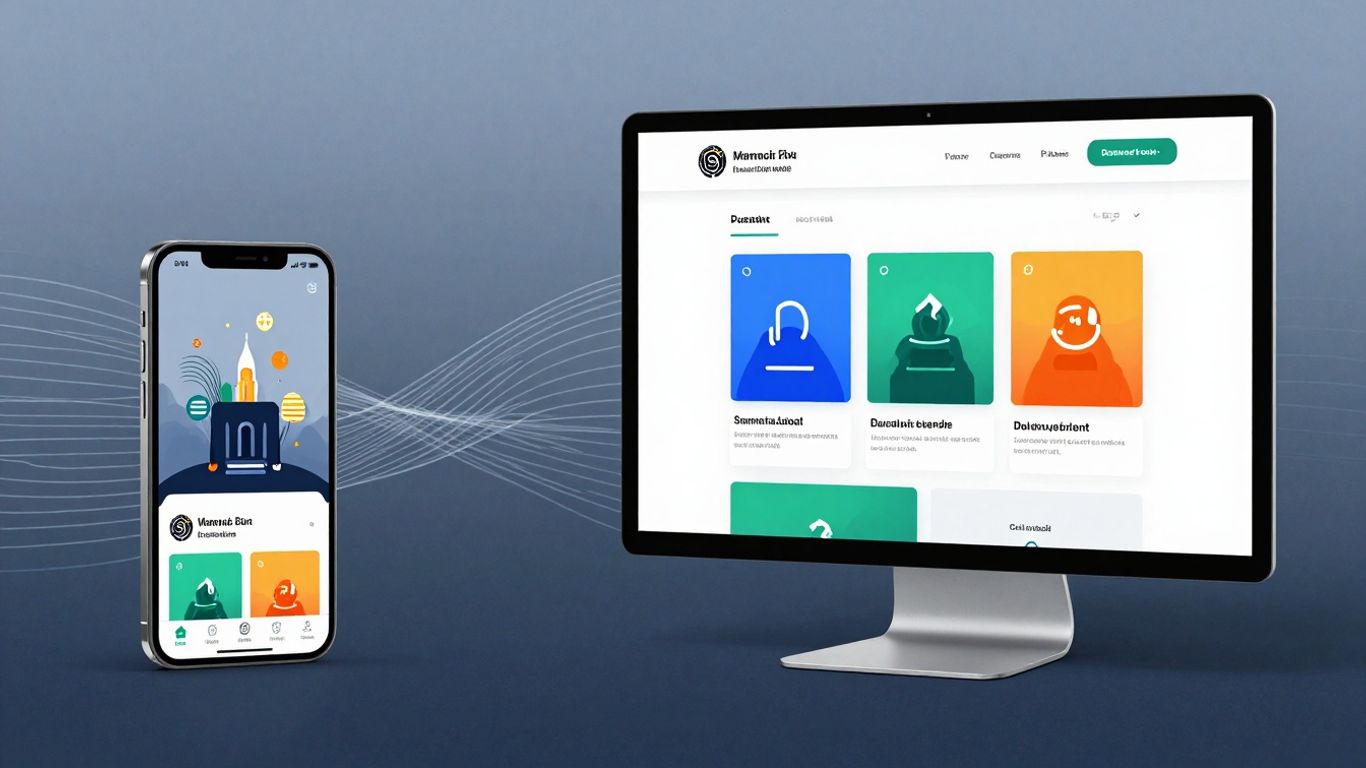
It’s pretty clear by now that most people are using their phones to get online. Google noticed this ages ago and switched to what they call "mobile-first indexing." Basically, they look at the mobile version of your website first when deciding how to rank it. If your mobile site isn't up to par – maybe it loads slow, is hard to read, or doesn't have all the info the desktop version does – your search rankings can really take a hit. It’s not just about having a site that looks okay on a phone; it needs to work just as well, if not better, than the desktop version.
Ensuring Seamless Mobile Compatibility
So, what does this mean for your website? You've got to make sure it's responsive, meaning it adjusts to fit any screen size. Page speed is a big deal here too; nobody waits around for a slow-loading page on their phone. Navigation needs to be simple and intuitive on smaller screens. Think about how people actually use their phones – quick searches, on the go. Your site needs to fit that lifestyle.
Here are some things to check:
- Responsive Design: Does your site automatically adjust its layout for different screen sizes?
- Mobile Load Times: How fast does your site load on a mobile connection? Aim for under 3 seconds.
- Tap Target Size: Are buttons and links easy to tap with a finger without accidentally hitting something else?
- Content Accessibility: Is all your important content visible and readable on mobile without excessive zooming or scrolling?
Making your site work well on mobile isn't just a nice-to-have anymore. It's a requirement if you want to be found online. Google's tools can help you spot problems, but real user testing is even better.
Optimizing for Conversational Queries
Then there's voice search. With smart speakers and phone assistants everywhere, people are talking to their devices to find things. These voice searches are usually longer and sound more like natural conversation than typed queries. They're often phrased as questions. So, instead of typing "best pizza near me," someone might ask, "Hey Google, what's the best pizza place open right now that delivers?"
To get found through voice search, you need to think about how people actually talk. This means creating content that directly answers common questions. Using structured data, like schema markup, helps search engines understand your content better and can help you get those coveted featured snippets, which are often read aloud by voice assistants. It’s about being clear, direct, and anticipating what users will ask.
Structured Data and Semantic Understanding
Enhancing Search Engine Comprehension
Search engines are getting smarter, and they're not just looking at keywords anymore. They're trying to figure out what your content means. That's where structured data comes in. Think of it like giving search engines a cheat sheet for your website. It's code you add to your pages that explicitly tells search engines about the information on that page. This helps them understand context and relationships between different pieces of data. For example, if you have a recipe page, structured data can tell the search engine exactly what ingredients are needed, how long it takes to cook, and what the nutritional information is. This is way better than the search engine just guessing based on the words on the page.
Achieving Rich Snippets and Featured Snippets
When search engines understand your content better, they can show it off in more interesting ways. This is how you get those eye-catching "rich snippets" in the search results. Instead of just a plain blue link, you might see star ratings for a product, cooking times for a recipe, or event dates. These stand out and often get more clicks. It's also a big deal for featured snippets – those answer boxes that appear at the top of the search results. By using structured data correctly, you're making it easier for Google to pull out a direct answer from your content and display it prominently. This can really boost your visibility.
Here's a quick look at what structured data can help with:
- Product information (price, availability, ratings)
- Recipe details (ingredients, cook time, instructions)
- Event listings (date, time, location)
- Article details (headline, author, publication date)
- Local business information (address, phone number, hours)
Aligning Content with User Intent
Ultimately, all of this is about making your website more useful to people. When search engines can understand your content's meaning and context, they can match it better with what users are actually looking for. This is called "semantic understanding." It means going beyond just matching keywords to understanding the intent behind a search query. If someone searches for "best way to bake sourdough bread," a site with well-structured data about baking, ingredients, and techniques is more likely to show up than a site that just happens to mention "sourdough" and "bake" a few times. It’s about providing the right information, in the right format, at the right time for the user.
The goal is to make your website speak the same language as the search engine, and by extension, the user. This clarity helps search engines serve up your content to the most relevant audiences, leading to more qualified traffic and better engagement on your site. It's a win-win for everyone involved.
Predictive Analytics and Future Trends
Forecasting Algorithm Shifts
It feels like search engines are always changing, right? One minute, you're optimizing for one thing, and the next, it's something totally different. That's where predictive analytics comes in. Instead of just reacting to algorithm updates, we can start to see them coming. By looking at the data we have – like how users are searching and what kind of content is getting attention – AI can help us guess what Google might do next. This means we can get our websites ready before the big changes even happen. It's like having a weather forecast for SEO, helping us prepare for sunny days or unexpected storms.
Adapting SEO Strategies Proactively
So, how do we actually use these predictions? It's not just about knowing what's coming; it's about doing something about it. If AI suggests that conversational queries will be huge, we start thinking about how our content can answer those questions naturally. Maybe we need to add more FAQs or structure our articles like a conversation. If the data points to a shift towards more visual search, we'll want to make sure our images and videos are top-notch and properly tagged. It’s about making smart moves now so your site is already in a good spot when the search engines catch up. This proactive approach is key to staying relevant in the fast-paced world of web design in 2025.
Maintaining a Competitive Edge
Ultimately, all this forecasting and adapting is about staying ahead of the game. Think about it: if you're the first one to really nail the new search trend, you're going to get noticed. Your competitors might still be figuring things out, but you'll already be attracting more visitors and getting better rankings. It’s not about being sneaky; it’s about being smart and efficient with your SEO efforts. This means:
- Analyzing past performance data to spot patterns.
- Monitoring industry news and competitor activities.
- Experimenting with new content formats and optimization techniques.
- Using AI tools to process large amounts of search behavior data.
The goal is to build a website that's not just good today, but also ready for whatever search engines throw at it tomorrow. It's about building a resilient online presence that can handle change.
Predictive analytics isn't some far-off sci-fi concept anymore; it's a practical tool that helps us make better decisions today to secure our website's success in the future.
Integrating SEO into Development Workflows
Making SEO a part of the building process from the get-go, rather than trying to tack it on later, is a game-changer. It means thinking about search engines and users right when you're sketching out ideas for a new feature or redesigning a page. This approach helps avoid costly fixes down the line and builds a stronger, more visible website from the start.
Making SEO a Foundational Element
Think of SEO not as a separate task, but as a core requirement for any web project. When developers and SEO specialists work together early on, they can catch potential issues before they become big problems. This collaboration means everyone understands how design choices impact search rankings and user experience. It's about building with searchability in mind.
- Prioritize mobile-friendliness: Design and develop with mobile users as the primary audience, as Google now indexes mobile-first.
- Plan site structure logically: Organize content and navigation in a way that's easy for both users and search bots to follow.
- Consider page load speed: Choose efficient coding practices and image formats that load quickly.
Building a website is like constructing a house. You wouldn't start putting up walls without a solid foundation and a clear blueprint. SEO needs to be part of that initial blueprint, not something you try to add after the roof is on.
Automating Technical Fixes
Manual checks for technical SEO issues can be time-consuming and prone to human error. Thankfully, there are tools that can help automate many of these tasks. This frees up developers to focus on building new things while still keeping the website in good shape for search engines. Automated checks can catch things like broken links, missing alt text, or slow-loading pages before they negatively affect your site's performance.
Here's a look at what can be automated:
| Task | Benefit |
|---|---|
| Broken Link Detection | Improves user experience, prevents crawl errors |
| Image Alt Text Check | Boosts accessibility and image search visibility |
| Page Speed Monitoring | Identifies performance bottlenecks |
| Duplicate Content Scans | Avoids search engine penalties |
| SSL Certificate Checks | Ensures secure connections |
Ensuring Continuous Website Optimization
SEO isn't a one-and-done deal. Search engine algorithms change, user behavior shifts, and new content is always being added. That's why it's important to have processes in place for ongoing optimization. This means regularly reviewing performance data, staying updated on SEO best practices, and making adjustments as needed. A commitment to continuous improvement keeps your website competitive and visible in the long run. It's about setting up systems that allow for regular health checks and proactive adjustments, rather than waiting for a problem to arise.
Making sure search engines can find your website is super important when you're building it. It's not just something you do later; it should be part of the whole process. By including SEO from the start, you help your site get noticed by more people. Want to learn how to make your website shine online? Visit our site today!
Wrapping It Up: The Future is Now
So, where does all this leave us? It's pretty clear that technical SEO isn't just about making sure search engines can find your site anymore. It's become this whole other level of making websites work better for people, using smart tech to figure out what users actually want. Things are changing fast, and if you're not keeping up, you'll get left behind. The good news is, a lot of this new tech, especially AI, is actually making things simpler in the long run. It helps us find problems faster and fix them, making websites that are not only good for search engines but genuinely useful for everyone who visits. It’s an exciting time to be working on websites, that’s for sure.
Frequently Asked Questions
What exactly is technical SEO and why is it important?
Technical SEO is like making sure your website's engine is running smoothly. It's all about the behind-the-scenes stuff that helps search engines like Google understand and rank your site. Think of things like making your website load super fast, being easy to use on phones, and having a clear structure. When these technical parts are good, search engines can find your content more easily, which helps more people discover your website.
How is AI changing the way we do technical SEO?
AI is like a super-smart assistant for technical SEO. It can help find problems on your website much faster than a person could, like spotting broken links or slow pages. AI can also help figure out what kind of content people are looking for and even suggest ways to make your content better. This means we can fix things quicker and make our websites work better for everyone.
What are Core Web Vitals and why do they matter for my website?
Core Web Vitals are like a report card for how well your website performs for visitors. They measure how quickly your page loads, how interactive it is, and how stable the layout is. Google cares a lot about these because they make a big difference in whether people have a good experience on your site. Websites that score well on Core Web Vitals tend to rank higher because they're more enjoyable to use.
Why is it so important for my website to work well on mobile phones?
Most people use their phones to search the internet these days. Because of this, Google mainly looks at the mobile version of your website to decide how to rank it. If your website isn't easy to use and look at on a small screen, it's going to hurt your chances of showing up in search results. Making sure your site is mobile-friendly is a must-have now.
What is structured data and how does it help my website?
Structured data is like giving search engines extra clues about what your website is about. It's a special code you add to your site that helps search engines understand your content better. When search engines understand your content well, they might show it in special ways in search results, like with pictures or star ratings, which can get more people to click on your link.
How often should I check my website for technical SEO issues?
It's a good idea to do a big check-up on your website's technical SEO at least twice a year. However, you should also keep an eye on important things like how fast your pages load and if there are any errors on your site more often, maybe once a month. This way, you can catch and fix problems before they start to affect your search rankings.


Comments
Post a Comment